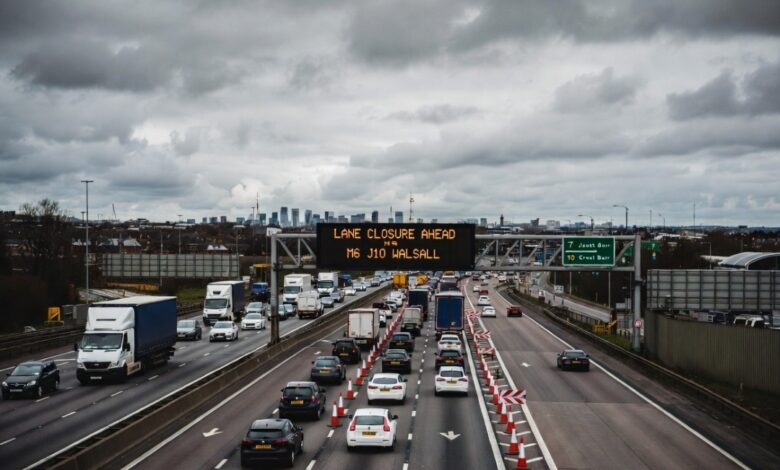
The M6 Walsall Birmingham lanes closure has become a familiar headache for drivers navigating one of Britain’s busiest motorway stretches, where the demands of daily commuting collide with essential maintenance and sudden incidents. For those traveling between the industrial heartlands of the Black Country and Birmingham’s bustling core, these disruptions aren’t just inconveniences—they represent lost hours, frayed tempers, and ripple effects across local economies. Whether caused by overnight resurfacing, bridge upgrades, or emergency responses to collisions, the closures highlight the constant tension between keeping a vital transport link safe and operational while managing the chaos it unleashes on thousands of lives.
The Strategic Importance of the M6 in the West Midlands Network
The M6 motorway serves as the backbone of connectivity in the West Midlands, linking major urban centers like Birmingham and Walsall while facilitating freight movement, business travel, and personal journeys across the region. Junction 7 near Great Barr and Junction 10 at Walsall act as critical interchange points, where traffic from the A34 and surrounding roads merges into high-speed flows. This section carries enormous volumes daily, often exceeding design capacities from decades past, making it prone to bottlenecks. The M6 Walsall Birmingham lanes closure events underscore how integral yet vulnerable this corridor is, especially as the area supports enterprise zones and employment hubs that rely on reliable access. Drivers know all too well how a single lane reduction can cascade into miles of queuing, affecting everything from school runs to logistics operations.
READ MORE: easyjet flight u2238 emergency landing newcastle: Heart-Stopping Skies Over the North Sea
Historical Context and Persistent Congestion Challenges
Historically, the M6 through Birmingham and Walsall has long been synonymous with congestion, dating back to its role as a key north-south route plagued by peak-hour merging and aging infrastructure. Before major interventions, Junction 10 was notorious for bottlenecks that deterred investment and frustrated residents. The M6 Walsall Birmingham lanes closure issues stem partly from this legacy, where growth in vehicle numbers outpaced upgrades. Incidents like multi-vehicle crashes or vehicle fires have repeatedly triggered lane restrictions, compounding delays near Wednesbury or Great Barr. Over the years, commuters have shared stories of abandoned plans and missed opportunities, turning routine trips into ordeals that test patience and highlight the human cost of infrastructure strain.
Major Infrastructure Projects and the Junction 10 Transformation
One of the most significant responses to these challenges was the £78 million M6 Junction 10 improvement scheme, a collaborative effort between National Highways and Walsall Council. Completed in phases around 2023-2024, it involved replacing two existing bridges with new four-lane structures, widening slip roads, and enhancing the roundabout to boost capacity. This project aimed to ease the very congestion that often leads to M6 Walsall Birmingham lanes closure announcements. While it delivered measurable improvements in flow during normal conditions, residual works and ongoing monitoring continue, with traffic lights managed locally. The transformation reflects a broader commitment to modernizing the network, though it required extensive temporary closures during construction that tested local resilience.
Ongoing Maintenance and Smart Motorway Enhancements
Beyond one-off projects, routine and strategic maintenance keeps the M6 dynamic. Initiatives like dynamic hard shoulder running between junctions 4 and 10a involve overnight lane closures for barrier upgrades and safety enhancements. Resurfacing efforts, such as those on the southbound carriageway between junctions 6 and 4, often necessitate full or partial closures to ensure long-term durability. These works, managed by National Highways, prioritize safety but inevitably trigger M6 Walsall Birmingham lanes closure alerts that ripple through journey planners. Lesser-known aspects include coordinated efforts with HS2-related adjustments nearby, where viaduct constructions over the M6 add layers of complexity to traffic management in the Birmingham area.
Impact on Local Communities and Daily Commuters
The human stories behind the M6 Walsall Birmingham lanes closure paint a vivid picture of disruption. Families face delayed school drops, shift workers endure unpredictable commutes, and businesses report supply chain hiccups that affect competitiveness. In Walsall, where the junction serves as a gateway, local economies tied to logistics and manufacturing feel the pinch during peak disruption periods. Emergency services navigate the same constraints, while public frustration often boils over on social media and local forums. These closures don’t just slow traffic—they strain mental health, increase fuel consumption, and contribute to air quality concerns in already busy urban fringes. Yet, they also foster community solidarity, with drivers sharing tips and diversions through apps and radio updates.
Economic Ripple Effects and Regional Development
Economically, frequent lane restrictions on this stretch influence investment decisions in the Black Country and Birmingham. The M6 Walsall Birmingham lanes closure episodes can deter potential relocations to enterprise zones near Junction 10, despite recent infrastructure gains. Freight operators factor in extra time buffers, raising costs that trickle down to consumers. On a positive note, successful upgrades have supported sites like SPARK, promising new jobs, but sustained reliability remains key. National Highways’ focus on predictive maintenance and real-time alerts aims to minimize these impacts, balancing short-term pain with long-term prosperity for the region’s interconnected economy.
Technological Advances and Traffic Management Innovations
Modern tools are transforming how these closures are handled. Variable message signs, live traffic apps, and enhanced monitoring help drivers anticipate M6 Walsall Birmingham lanes closure events. Smart motorway elements, including all-lane running sections, seek to maximize capacity while embedding safety features. Future directions include further LED lighting upgrades, better incident response protocols, and integration with broader transport strategies like improved public transit alternatives. These innovations offer hope that while closures remain inevitable for upkeep, their duration and severity can be better controlled, reducing the emotional toll on regular users.
Environmental and Safety Considerations in Roadworks
Safety drives much of the scheduling for lane closures, as worn surfaces or aging structures pose real risks. Environmental factors also play a role, with resurfacing projects timed to minimize disruption while addressing sustainability goals, such as reduced emissions through smoother flows post-works. Incidents like fires or collisions near Walsall amplify the need for rapid response, often closing lanes to protect responders and motorists. The M6 Walsall Birmingham lanes closure narrative thus intertwines engineering precision with broader goals of safer, greener travel corridors that serve future generations.
Looking Ahead: Future Resilience and User Adaptation
As traffic volumes evolve with economic shifts and population growth, the M6 corridor will likely see continued investment. Planned maintenance programs through 2026-2027 signal ongoing attention to this vital link. Commuters are adapting with flexible hours, car-sharing, and alternative routes via the M6 Toll or local roads, though these come with their own trade-offs. Ultimately, the story of M6 Walsall Birmingham lanes closure is one of progress amid challenge—a reminder that infrastructure is a living system requiring vigilance, funding, and public understanding to thrive.
Conclusion
Navigating the frustrations of M6 Walsall Birmingham lanes closure reveals deeper truths about modern mobility in a connected region. From the relief brought by Junction 10’s upgrades to the necessity of ongoing works, this stretch embodies both the promise and pitfalls of essential transport arteries. While delays test our collective patience, they also drive innovation and resilience. By staying informed and supporting smart investments, communities around Walsall and Birmingham can look forward to smoother journeys that bolster economic vitality and quality of life. The road ahead demands balance, but the destination—a more reliable network—is worth the shared effort.
FAQs
What typically causes M6 Walsall Birmingham lanes closure events?
Lane closures in this area often result from scheduled maintenance like resurfacing or bridge works by National Highways, as well as unplanned incidents such as collisions or vehicle fires. These measures ensure safety but require drivers to check real-time updates via apps or traffic services for the latest details.
How do M6 Walsall Birmingham lanes closure affect journey times?
Closures can add significant delays, sometimes turning a 20-minute trip into over an hour, especially during peak hours near junctions 7 and 10. Diversions onto A-roads increase congestion locally, impacting commuters and freight alike. Planning ahead with alternative routes helps mitigate this.
When was the major upgrade at M6 Junction 10 completed?
The £78 million improvement scheme, which widened bridges and enhanced the junction, reached substantial completion around 2023-2024. It aimed to reduce the frequency and severity of bottlenecks that contribute to lane closures in the Walsall-Birmingham area.
Are there alternatives to using the M6 during lanes closure?
Yes, options include the M6 Toll road for bypassing some congestion, or local routes like the A34, though these can also become busy. Public transport, carpooling, or adjusting travel times are recommended strategies during known works.
How can drivers stay updated on future M6 Walsall Birmingham lanes closure?
National Highways provides alerts through their website, Traffic England, and social channels. Local radio, apps like Google Maps or Waze, and council updates offer timely information to help plan journeys effectively around maintenance or incidents.